

Packaging plays an important role in protecting products, preventing accidents, and maintaining safety in homes and workplaces. Some products, such as medicines, cleaning supplies, and certain household chemicals, can be dangerous if children access them without adult supervision. This is why special packaging designs are used to reduce the risk of accidental access. 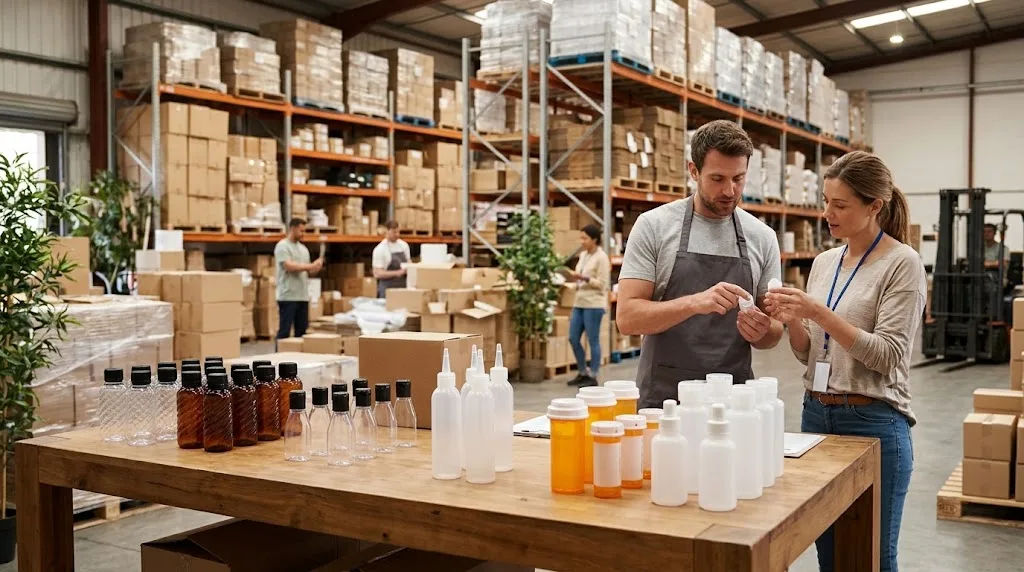 One important safety solution is child-resistant packaging.
Child resistant containers are specially designed packaging solutions that make it difficult for young children to open potentially harmful products while allowing adults to access them without unnecessary difficulty. They use carefully developed closures, locking features, and opening mechanisms to create an additional layer of protection. Although these containers cannot guarantee complete safety, they help reduce the chances of accidental exposure when used correctly.
Understanding how these containers work can help parents, caregivers, manufacturers, and consumers make better packaging decisions. From safety standards and closure designs to everyday applications and proper storage, several factors contribute to their effectiveness.
What Are Child Resistant Containers?
child resistant containers are packaging products designed to make access more difficult for young children, particularly when they contain substances that could cause harm if accidentally swallowed or improperly handled.
These containers commonly include special closures, protective caps, and locking systems. Their purpose is to create a barrier that requires a level of coordination, strength, or understanding that young children may not have developed.
However, the packaging is not intended to prevent adults from opening it. Instead, manufacturers aim to balance child safety with reasonable convenience for responsible adult users.
Why Are These Containers Important?
Young children naturally explore their surroundings. They may pick up unfamiliar objects, investigate colorful packaging, or imitate adults opening everyday products.
Ordinary containers may not provide enough protection against this behavior.
Child-resistant designs introduce additional safety features that help reduce accidental access. They are particularly important for products that could cause poisoning, chemical exposure, or other health problems.
What Products Use Child-Resistant Packaging?
Several industries use this packaging to improve product safety.
Common examples include:
-
Prescription and over-the-counter medicines.
-
Certain household cleaning products.
-
Chemical products that require restricted access.
-
Some concentrated liquids.
-
Certain regulated consumer products.
-
Products containing potentially harmful substances.
The packaging requirements depend on the product, its ingredients, and the regulations that apply in the relevant market.
How Do Child Resistant Containers Work?
The main purpose of these containers is to introduce an additional barrier between children and potentially harmful contents.
Unlike ordinary packaging, which may open through a simple twisting or pulling motion, specialized containers incorporate safety features that make opening more challenging.
The exact mechanism depends on the packaging design.
Special Closure Mechanisms
Closures are among the most important parts of child-resistant packaging.
A closure may require more than one coordinated movement before the container can be opened. This makes the design more challenging for young children while remaining manageable for adults.
Different manufacturers develop closures according to the product's intended use, material, and applicable safety requirements.
Multiple Actions for Opening
Some packaging designs require users to perform two actions together rather than relying on a single movement.
This approach introduces an additional level of difficulty compared with ordinary packaging.
The objective is not to make the container impossible to open. Instead, it is to reduce the likelihood that a young child will open it accidentally.
Secure Container Construction
The container body also contributes to overall safety.
Manufacturers consider the strength of the material, the quality of the closure connection, and the possibility of accidental damage.
A properly manufactured container should maintain its intended protective characteristics during normal handling and storage.
Different Types of Child-Resistant Containers
Not every product requires the same packaging solution. Manufacturers select designs based on the product's characteristics, storage requirements, and applicable safety standards.
Child-Resistant Plastic Bottles
Plastic bottles are commonly used for medicines, household products, and other consumer goods.
They are available in different shapes, sizes, and materials.
Their packaging systems can incorporate specially designed closures that provide additional protection against accidental opening.
Plastic bottles are also lightweight, making them practical for transportation, storage, and everyday use.
Child-Resistant Jars
Some products require wider containers rather than traditional bottles.
Child-resistant jars provide an alternative for packaging products that need a larger opening or different storage arrangement.
Manufacturers consider the jar's material, closure compatibility, and intended contents when selecting an appropriate design.
Child-Resistant Pouches
Flexible packaging is another option for certain consumer products.
Specialized pouches may include safety-focused closure systems designed to reduce access by young children.
They are useful in applications where lightweight packaging and convenient transportation are important.
Child-Resistant Packaging for Medicines
Medicine packaging is one of the most recognizable applications of child-resistant technology.
Many pharmaceutical products require packaging that helps prevent accidental access while remaining practical for patients and caregivers.
The selected design must also consider medication protection, labeling requirements, and ease of use.
What Makes a Container Child-Resistant?
Several characteristics contribute to the effectiveness of protective packaging.
A container should not be considered child-resistant simply because it has a tight cap or appears difficult to open.
Its design and performance must be evaluated against applicable safety requirements.
Tested Safety Performance
Child-resistant packaging is generally evaluated through standardized testing procedures.
These assessments examine whether children within specified age groups can access the contents under controlled testing conditions.
Adult participants may also be involved in testing to assess whether the packaging remains reasonably accessible.
In the United States, the Poison Prevention Packaging Act and related regulations establish important requirements for certain products.
The Consumer Product Safety Commission oversees relevant packaging regulations and testing requirements.
Reliable Closure Design
The closure must remain compatible with the container throughout normal use.
Poorly manufactured caps, damaged threads, or defective components can reduce packaging effectiveness.
Manufacturers therefore need appropriate quality-control procedures.
Appropriate Materials
Packaging materials should be selected according to the product's chemical and physical characteristics.
For example, certain chemicals may react with unsuitable materials or gradually weaken packaging components.
Using compatible materials helps maintain the container's intended protective properties.
Understanding Child-Resistant Packaging Standards
Safety standards provide manufacturers with guidelines for evaluating and developing packaging.
These standards are important because they establish measurable requirements rather than relying on appearance or marketing claims.
United States Packaging Regulations
In the United States, the Poison Prevention Packaging Act of 1970 established requirements for special packaging used with certain potentially hazardous household products and medicines.
The Consumer Product Safety Commission administers relevant regulations.
These rules help ensure that packaging meets recognized safety expectations.
Not every product automatically requires the same packaging. Requirements depend on the product category and applicable legislation.
International Safety Requirements
Other countries may have their own packaging regulations and testing standards.
Manufacturers selling products internationally must understand the requirements of each target market.
Packaging that satisfies one country's regulations may not automatically satisfy another country's requirements.
Importance of Certification and Testing
Manufacturers should obtain appropriate testing and documentation before making child-resistant claims.
Testing helps establish whether a packaging design meets the applicable requirements.
It also provides useful information for identifying design weaknesses and improving product quality.
How Effective Are Child Resistant Containers?
Child-resistant packaging can significantly reduce opportunities for accidental access, but it is important to understand its limitations.
No packaging system should be treated as completely childproof.
Children develop new abilities as they grow. A container that presents a challenge to a younger child may become easier for an older child to understand or manipulate.
Factors That Influence Effectiveness
Several factors can influence packaging performance.
Container condition: Damaged packaging may not provide the protection expected from its original design.
Closure quality: Poorly fitted or defective closures can affect the overall safety of the container.
Correct use: Packaging may lose its protective benefit if users fail to close it properly after use.
Age and development: Children's coordination, strength, and problem-solving abilities change over time.
Storage conditions: Heat, moisture, and unsuitable storage environments may affect packaging materials.
For these reasons, protective packaging should always be combined with responsible storage practices.
Benefits of Child-Resistant Packaging
Child-resistant packaging offers several advantages for consumers, manufacturers, and retailers.
Reduces Accidental Access
One of its main benefits is reducing the likelihood that young children will access potentially dangerous products.
An additional opening barrier gives adults more control over products that require careful handling.
Supports Household Safety
Parents and caregivers often store medicines and household products in areas where children may be present.
Specialized packaging provides another level of protection within these environments.
Helps Manufacturers Meet Regulations
Certain industries must follow specific packaging requirements.
Using appropriately tested designs helps manufacturers meet applicable regulatory obligations.
It also demonstrates a commitment to product safety.
Protects Product Integrity
Some specialized packaging systems can also help maintain product quality by supporting secure closure and reducing unintended exposure.
However, child resistance and product freshness are separate packaging considerations. A container may provide one benefit without automatically providing the other.
Builds Consumer Confidence
Consumers generally expect potentially hazardous products to include appropriate safety measures.
Reliable packaging can improve confidence in a manufacturer's approach to responsible product design.
Limitations of Child-Resistant Containers
Although these containers offer important benefits, they also have limitations.
Understanding these limitations helps consumers avoid relying on packaging as the only safety measure.
They Are Not Completely Childproof
The term child-resistant does not mean that children can never open the container.
It means that the packaging has been designed and tested to meet specific resistance requirements.
An older child may eventually figure out how to access a container.
They May Be Difficult for Some Adults
Certain users may experience difficulties with specialized packaging.
Older adults and individuals with limited hand strength or coordination may find some designs challenging.
Manufacturers must therefore balance accessibility with safety.
Packaging Can Become Damaged
Repeated use, improper storage, and physical damage can affect packaging performance.
A broken closure or damaged container should not be assumed to provide its original level of protection.
Incorrect Closing Reduces Protection
Even a well-designed container cannot provide its intended benefit if it is not closed correctly.
Users should follow the manufacturer's instructions and check that the closure is properly secured after each use.
How to Choose the Right Child-Resistant Container
Selecting suitable packaging requires more than choosing a container with a special-looking cap.
Manufacturers and product owners should evaluate several factors before making a decision.
Consider the Product Type
The first step is understanding what the container will hold.
Medicines, liquids, powders, and household chemicals may require different packaging materials and closure systems.
The selected container should be compatible with the product.
Check Applicable Safety Requirements
Packaging regulations vary according to product category and location.
Manufacturers should identify the relevant requirements before selecting or purchasing packaging.
Professional testing may be necessary to verify compliance.
Evaluate Material Quality
The container should be made from materials suitable for its intended contents.
Important considerations include durability, chemical compatibility, and resistance to normal handling conditions.
Consider Adult Accessibility
Protective packaging should also be practical for its intended adult users.
Manufacturers should consider the needs of consumers who may have limited grip strength or other accessibility challenges.
Work With Reliable Packaging Suppliers
A reputable packaging supplier can provide information about materials, closure compatibility, testing, and available documentation.
This helps businesses make informed decisions and avoid relying on unsupported safety claims.
Child-Resistant Containers vs. Ordinary Containers
The main difference between these packaging types is their approach to controlling access.
|
Feature |
Child-resistant containers |
Ordinary containers |
|---|---|---|
|
Main purpose |
Reduce accidental child access |
Store and protect products |
|
Closure design |
Includes additional safety features |
Usually has a standard closure |
|
Testing |
May require specific safety testing |
Depends on product requirements |
|
Adult access |
Designed to remain reasonably accessible |
Generally straightforward |
|
Safety application |
Suitable for products requiring special packaging |
Suitable for general packaging |
Ordinary packaging is appropriate for many everyday products.
However, products that fall under child-resistant packaging regulations may require specialized solutions.
How to Use Child-Resistant Containers Safely
Correct use is essential for maintaining the intended protective benefits.
Parents, caregivers, and other household members should follow basic safety practices.
Keep Containers Closed
Always close packaging according to the manufacturer's instructions after using the product.
Do not leave potentially harmful products in open containers.
Store Products Away From Children
Place medicines and household chemicals in secure storage areas that children cannot easily access.
High shelves alone may not provide sufficient protection.
A locked storage cabinet offers an additional safety measure.
Keep Products in Their Original Packaging
Original packaging often includes important safety information, product identification, and instructions.
Transferring medicines or chemicals into ordinary food or beverage containers can create confusion and increase accidental exposure risks.
Check Packaging Regularly
Inspect containers for cracks, damaged closures, missing components, or other visible problems.
Replace damaged packaging when appropriate.
Follow Product Instructions
Different packaging designs may have different opening and closing requirements.
Always follow the manufacturer's directions instead of assuming every container works in the same way.
Common Myths About Child-Resistant Packaging
Several misunderstandings can cause consumers to underestimate or overestimate packaging safety.
Myth 1: Child-Resistant Means Childproof
This is incorrect.
Child-resistant packaging is designed to reduce the likelihood of accidental access. It does not guarantee that children will never open it.
Myth 2: Any Tight Cap Is Child-Resistant
A tight-fitting cap does not automatically qualify as child-resistant packaging.
The packaging must meet the relevant testing and regulatory requirements.
Myth 3: Adults Cannot Open These Containers Easily
Child-resistant packaging is intended to balance child resistance with reasonable adult accessibility.
However, some designs may be challenging for certain users.
Myth 4: Proper Packaging Removes the Need for Safe Storage
Packaging is only one part of a broader safety strategy.
Medicines, chemicals, and other potentially hazardous products should always be stored responsibly.
The Future of Child-Resistant Packaging
Packaging technology continues to develop as manufacturers look for better ways to improve safety and convenience.
New materials, manufacturing methods, and closure designs may help improve packaging performance.
Improved Packaging Materials
Manufacturers continue to explore materials that offer better durability and compatibility with different products.
The objective is to create packaging that maintains its protective characteristics during ordinary storage and handling.
Better Accessibility
Another important area of development is improving accessibility for adults.
Packaging designers are exploring ways to make products easier for responsible users to access without weakening the intended safety performance.
Sustainable Packaging Solutions
Environmental responsibility is becoming increasingly important in the packaging industry.
Manufacturers are investigating recyclable materials and more efficient production processes.
However, environmental improvements must not compromise applicable safety requirements.
Smarter Packaging Technology
Some companies are exploring additional packaging features that may improve product identification, tracking, and consumer information.
These developments could support broader product safety efforts in the future.
Conclusion
Child-resistant packaging plays an important role in reducing accidental access to medicines, chemicals, and other potentially harmful products. Its main purpose is to create an additional safety barrier while keeping products reasonably accessible to responsible adults.
Understanding how child resistant containers work makes it easier for consumers and businesses to recognize the importance of specialized packaging. Their protective features may include specially designed closures, secure construction, compatible materials, and testing according to applicable safety standards.
However, these containers should never be considered completely childproof. Their effectiveness depends on proper manufacturing, suitable materials, correct closing practices, and regular inspection.
Parents and caregivers should combine specialized packaging with secure storage, adult supervision, and responsible product handling. Manufacturers should also select packaging that meets relevant regulations and provides reliable performance throughout normal use.
Ultimately, child-resistant packaging is an important part of a wider approach to household and consumer safety. When properly designed, tested, and used, it helps reduce preventable risks and supports safer product storage in everyday environments.